Team
3 UX Designers
Tools
Figma
Lottie Animations
Skills
User Research
Interviews
Design Systems
Prototyping
← Back
Introduction
Problem
Solution
Research
First Iteration
Pivot
Design System
Usability Testing
Final Iterations
Impact
Reflection
Introduction
In a rise of popularity with micromobility transportation (e-bikes, e-scooters, etc), Lime brought their electric scooters to Austin in 2018. As of spring 2025, there are 3,700 Lime scooters in the city. E-scooters have become a prominent form of transportation, especially downtown and around the University of Texas’ campus.
Problem
Despite Lime’s and the city’s attempts at increased safety measures, such as decreasing night time speed limits, the improper parking of these rental e-scooters continues to be the top e-scooter complaint received by 311.
Improperly parked e-scooters, when left across sidewalks or roadways, for example, pose a safety hazard to pedestrians, drivers, and other commuters.
These e-scooters are often damaged or impounded by the city, resulting in fines for Lime. Our team sought to address this public safety concern through incentivizing more riders to park their e-scooters properly.
Solution
The Lime app already provides e-scooter riders with a map indicating valid parking spots, but many riders are still able to end their rides in spots outside of these designated parking zones, often on sidewalks or curb cuts.
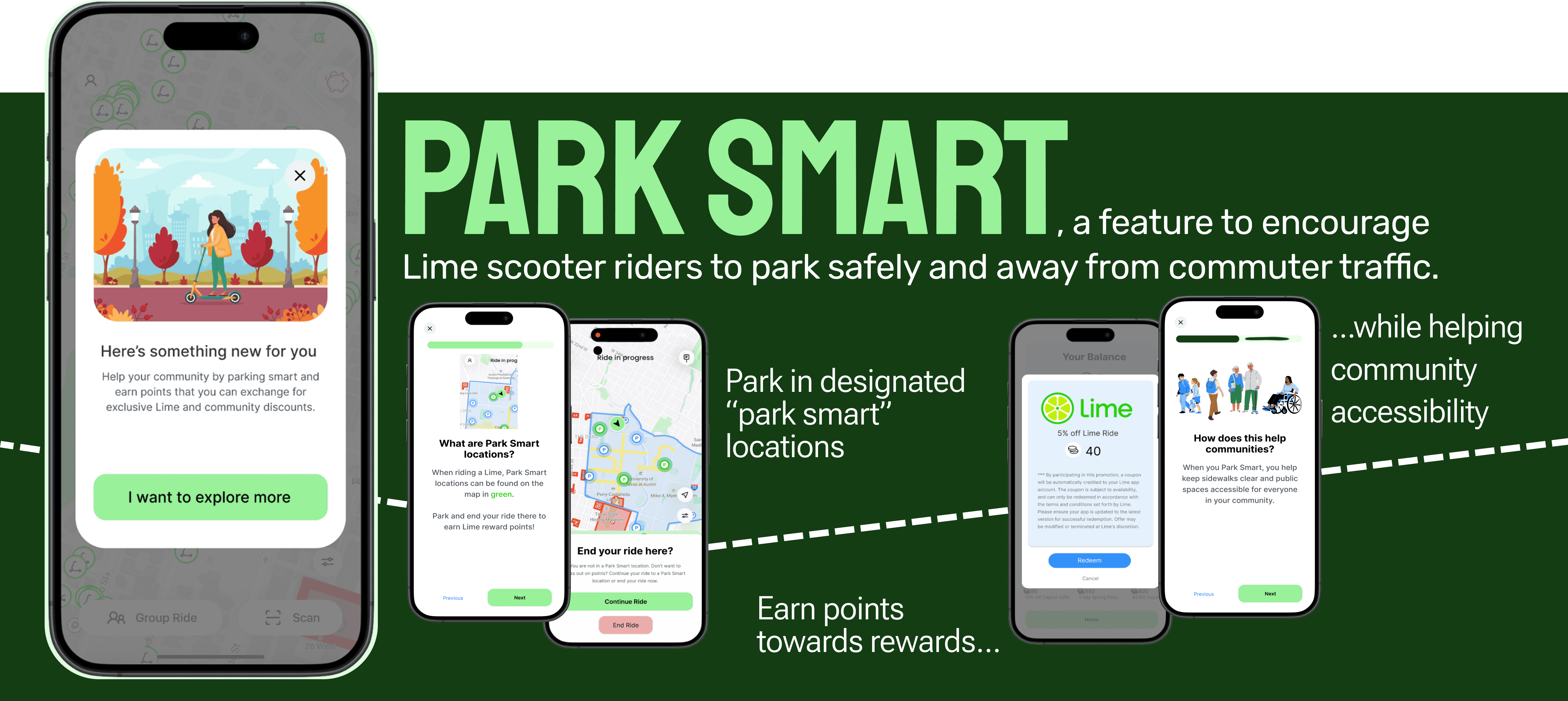
To help encourage riders to avoid this parking behavior, our team built off of the current Lime parking map and established “Park Smart” zones, specific parking spots well away from locations where a parked e-scooter would obstruct other commuters, including pedestrians or drivers. Riders who “parked smart” could earn points towards rewards, such as discounts on future Lime rides, restaurants, or other attractions in the rider’s city. With more riders parking smart, the number of e-scooters parked in obstructive locations would decrease, improving safety for other commuters and saving Lime money on impound fees and damaged scooter replacements.
Research
To better understand the impacts of improper rental e-scooter parking, we talked to people in two user groups - micromobility transport experts and rental e-scooter riders.
Expert Interviews
We spoke with the Shared Mobility Services team at the Transportation and Public Works department in the City of Austin.
Key Takeaways:
Improper e-scooter parking is the #1 complaint received by 311 regarding e-scooters.
The city collects a $200 fee for every impounded scooter.
Entertainment districts and other hot areas have the highest e-scooter citation rates.
Our interview with the Shared Mobility Services team validated that our identified problem of improper e-scooter parking was indeed a prevalent problem within the city of Austin.
User Surveys and Interviews
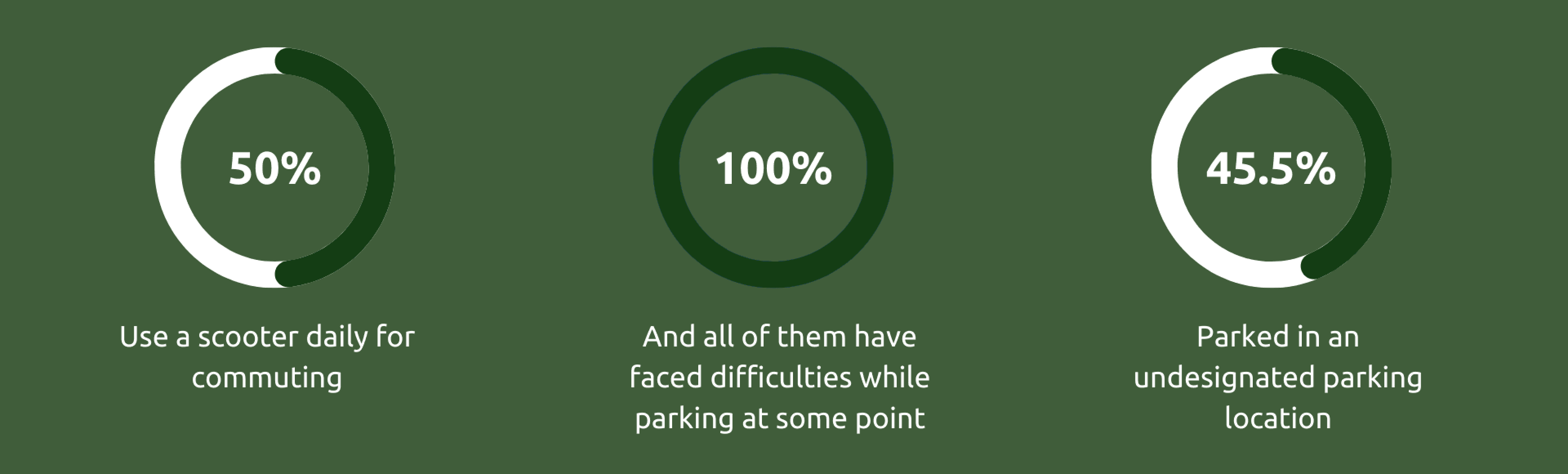
Through a 14-question survey, we surveyed 32 people who ride e-scooters at least once a month to learn about their parking habits, what drove those habits, and their thoughts on current parking infrastructure. We also asked participants what they thought might help encourage more e-scooter riders to park more responsibly.
What we found:
Following the survey, we interviewed seven respondents to further learn about their e-scooter commuting experiences and challenges when riding.
On experiences when looking for a parking spot:
“Parking spots are the worst. The app will give you a designated zone and then when you try to park…it won’t let you but the next designated zone is farther away and you get charged for an extra 10 minutes so it’s a waste of time and money. So at that point, you just try to park it wherever.”
“Especially when I’m running late and need to park, I just do trial and error hoping it lets me park and then just leave it.”
“Once, I really couldn’t find parking [on campus], so I abandoned the scooter and reported an issue on the app. I don’t want to get banned or create additional work for others.”
On discounts/rewards as an incentive:
“Having cash back would be cool considering how expensive renting Limes can get.”
“Cash back on future rides or discounts would be super neat to have.”
On fines/restrictions to deter improper parking:
“...I think having incentives gives a better motive, because fines might move people away from parking properly and instead try to find ways to avoid fines.”
“I don’t think it would be effective because people would just keep trying.”
On Lime scooter obstructions:
“Especially on sidewalks on Guad closer to campus, scooters will take up a whole sidewalk so I’ll walk in the bike lane since it’s an obstacle to get past it.”
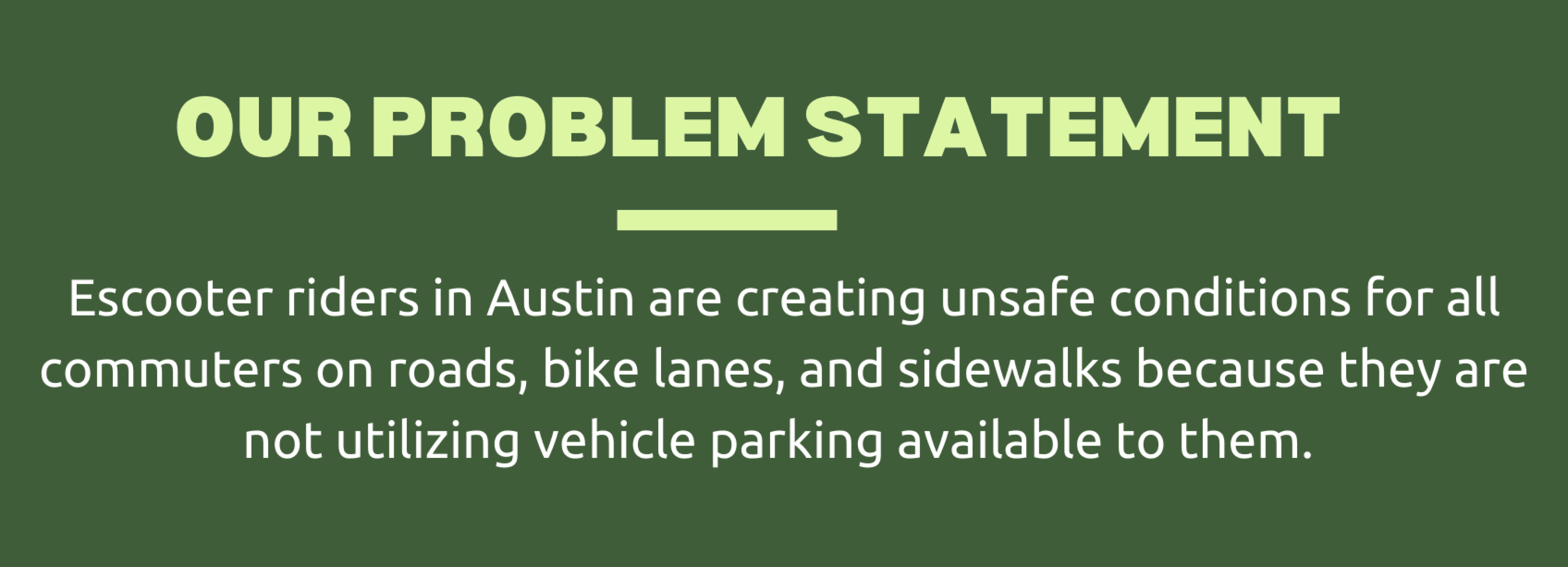
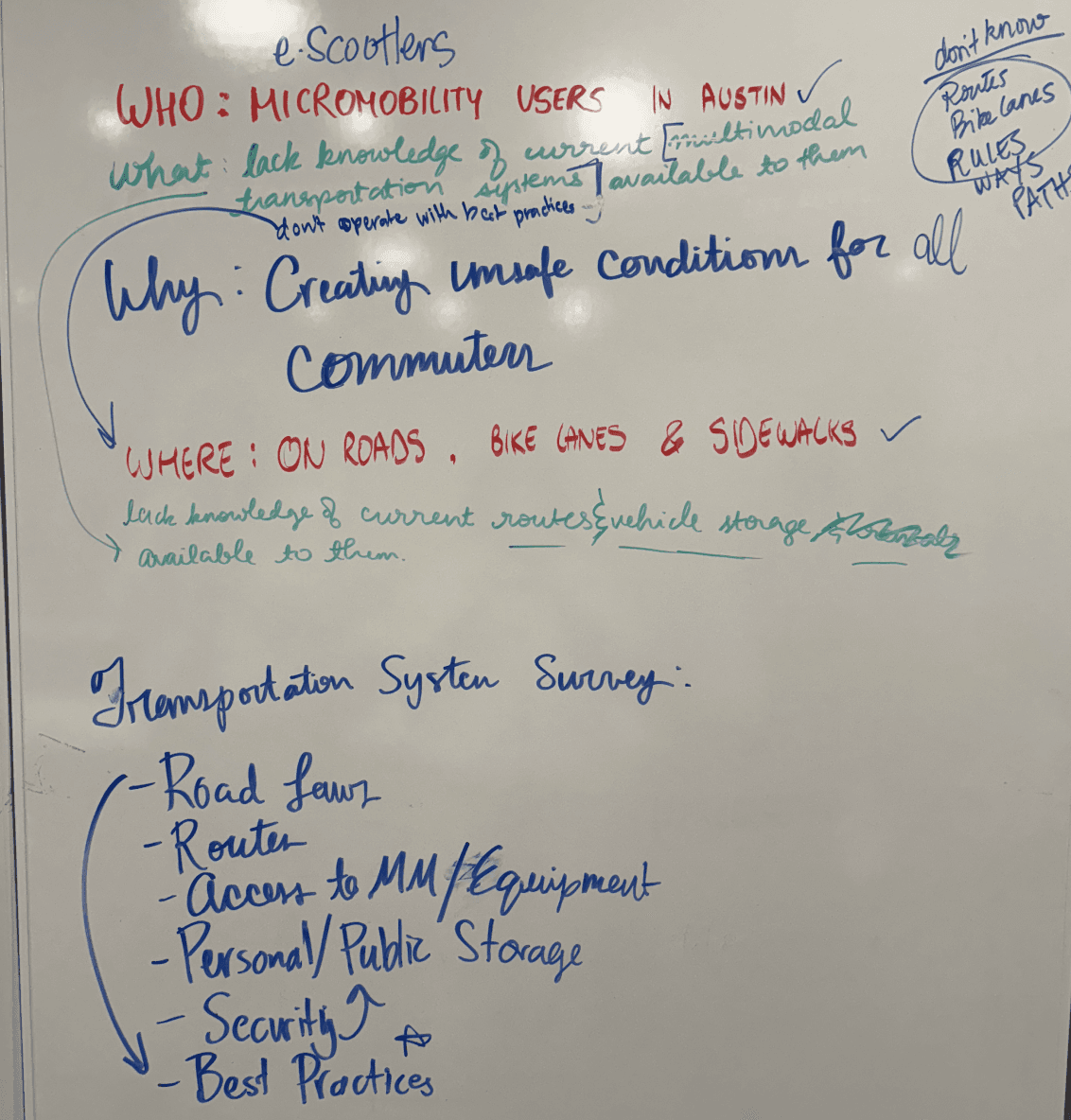
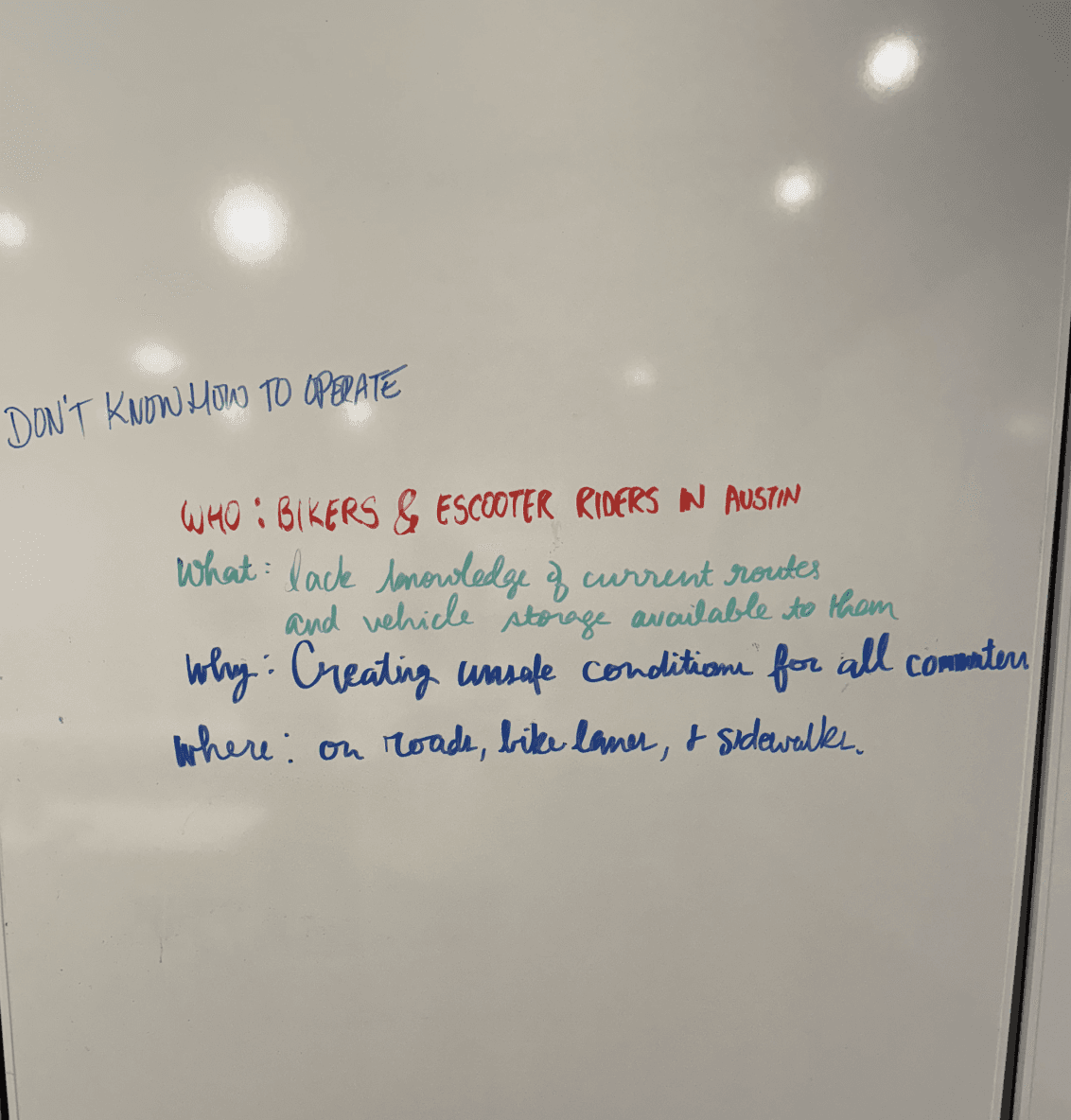
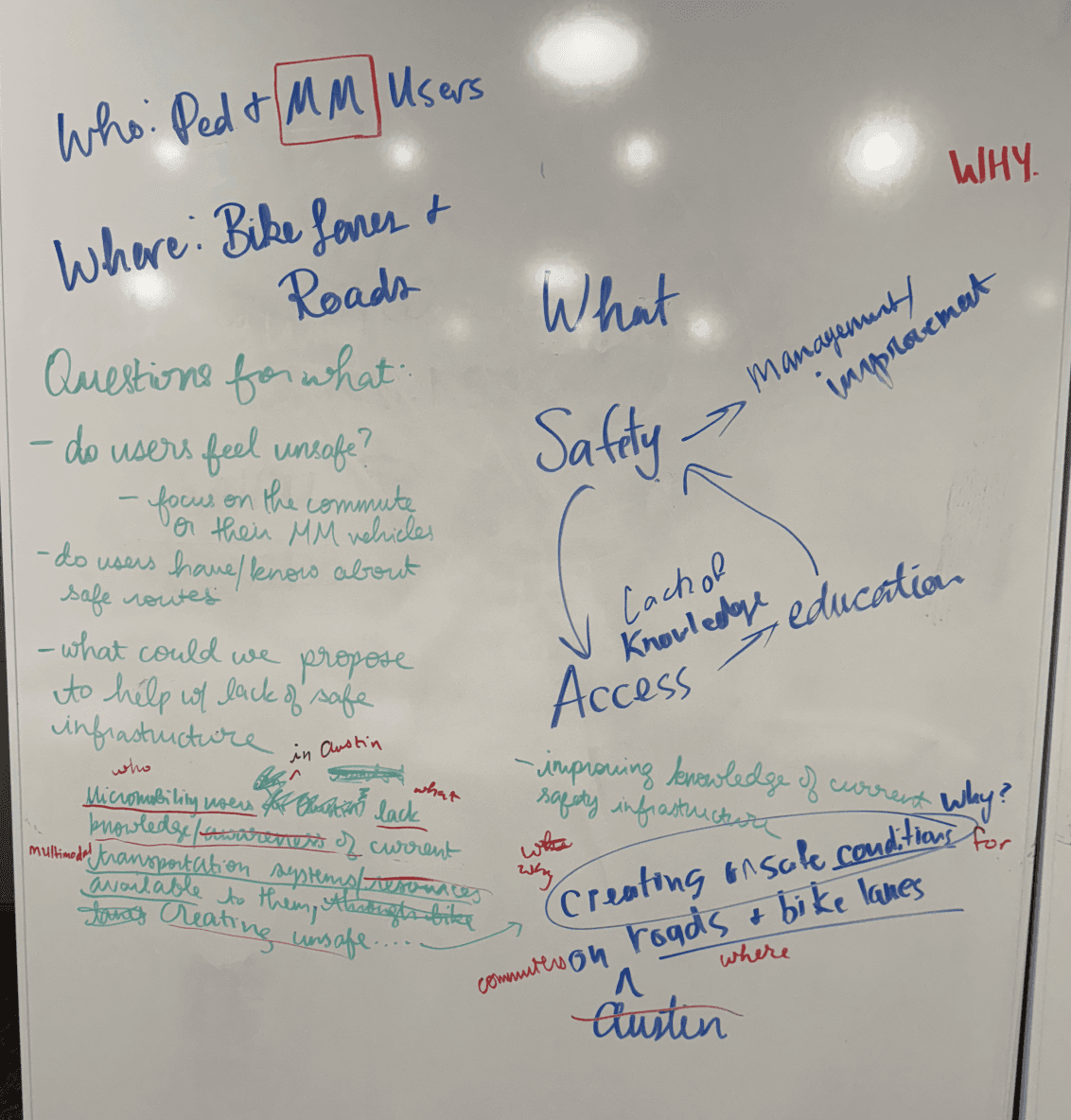
From these insights, we developed our initial problem statement:
First Iteration
The initial direction of our solution was to create an app with one main purpose: provide rental e-scooter riders with real-time updates on parking availability at parking racks. In collaboration with the University of Texas’ Cockrell School of Engineering, we would create smart racks with sensors that would signal availability through red and green lights on our app. This way, riders could know ahead of time if a parking rack near their destination would have availability upon arrival.
Sketches Lo-Fi Wireframes

Pivot
After further brainstorming and usability testing, we realized this solution was more tailored towards riders who owned their own e-scooters, and not towards rental e-scooter riders. Rental e-scooters are more commonly parked in obstructive ways than personal e-scooters, so to ensure our solution focused on our original goal of addressing the improper parking of e-scooters in Austin, we went back to the drawing board.
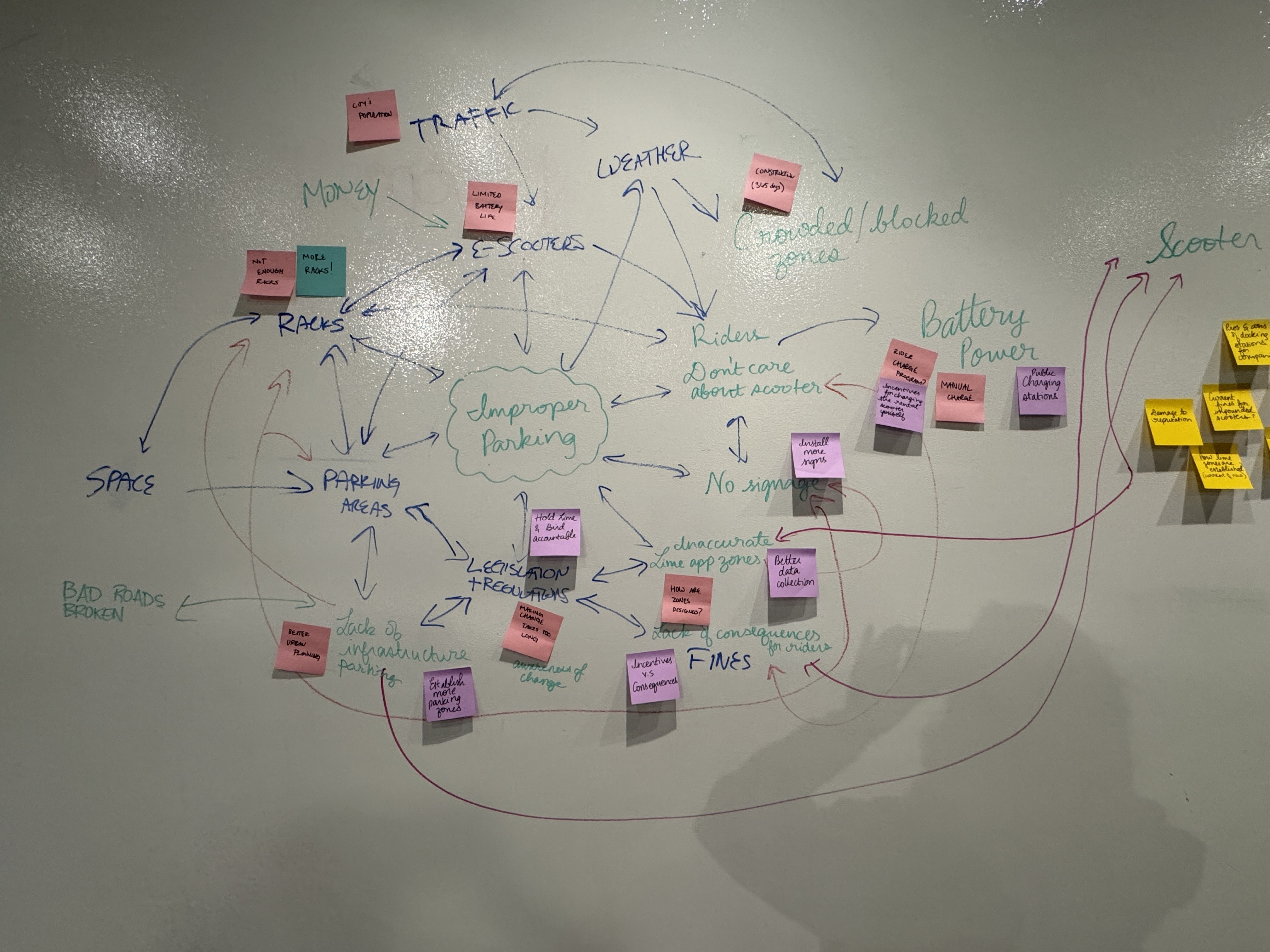

We realized that the Lime app already had all of the base infrastructure that allowed riders to rent an e-scooter, ride it, and park it. We wanted to add a way to incentivize riders to park within the bounds of parking zones indicated in the Lime app. As a result, our solution pivoted and became an extension of the Lime app as opposed to a standalone platform.
Design System
After we pivoted, we created a design system and built out our high-fidelity prototype for usability testing.

Usability Testing
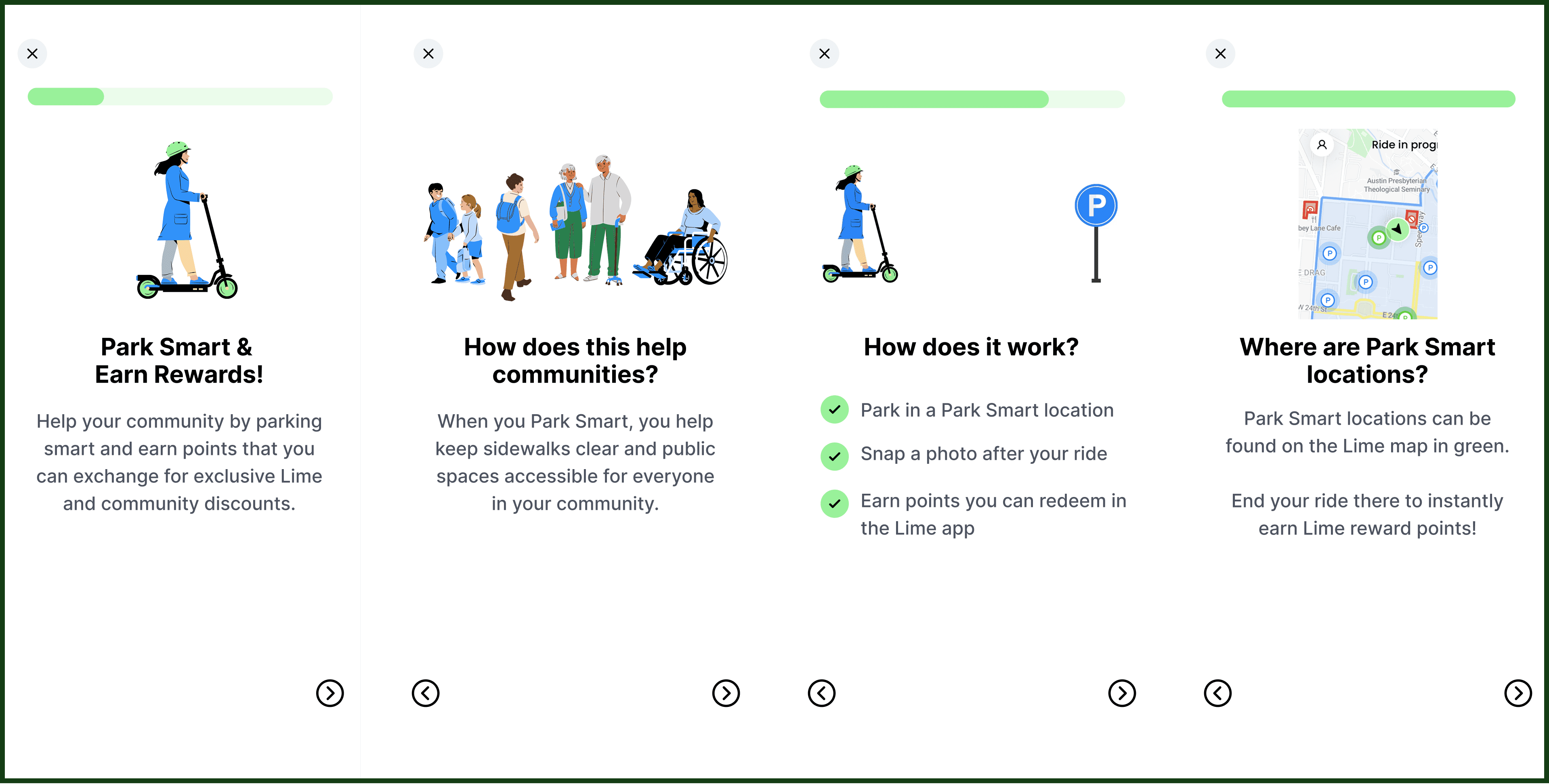
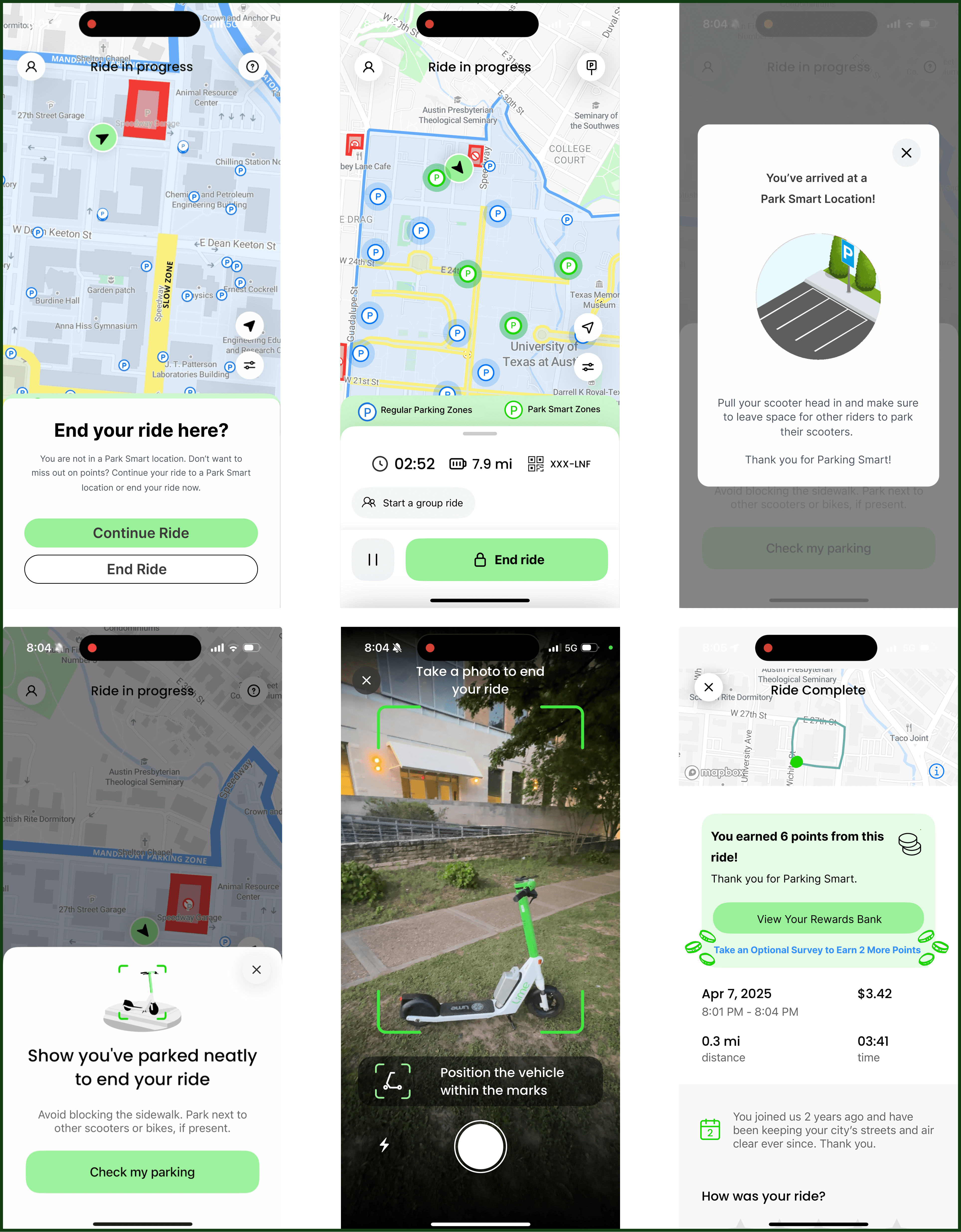
To test our prototype, we created three tasks for participants to complete during usability testing sessions:
Onboarding
Completing a Ride
Redeeming Rewards

Final Iterations
We used the feedback we received from usability testing to iterate on our designs.
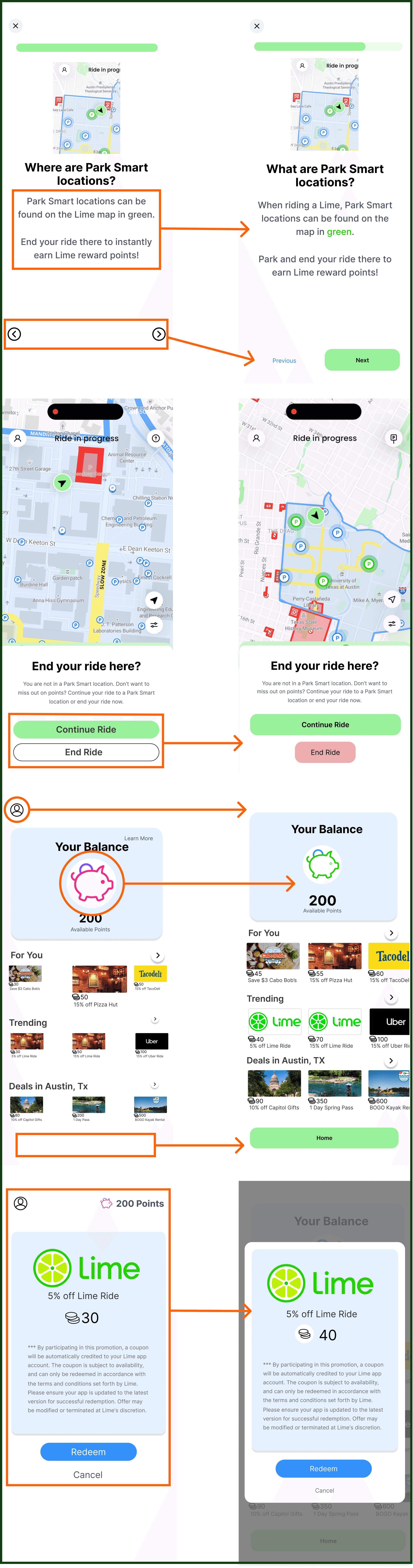
Impact
Lime has over 200,000 e-scooters in over 30 countries around the world, with 3,700 in Austin. As of the end of 2024, Lime paid over $700,000 to the City of Austin in impound fees. In incentivizing riders to park safely everywhere, we can decrease the number of impounded or damaged e-scooters, saving Lime money on fees or replacements. Having a Rewards Center with appealing discounts can also encourage more people to utilize Lime e-scooters, bringing Lime more customers.
Reflection
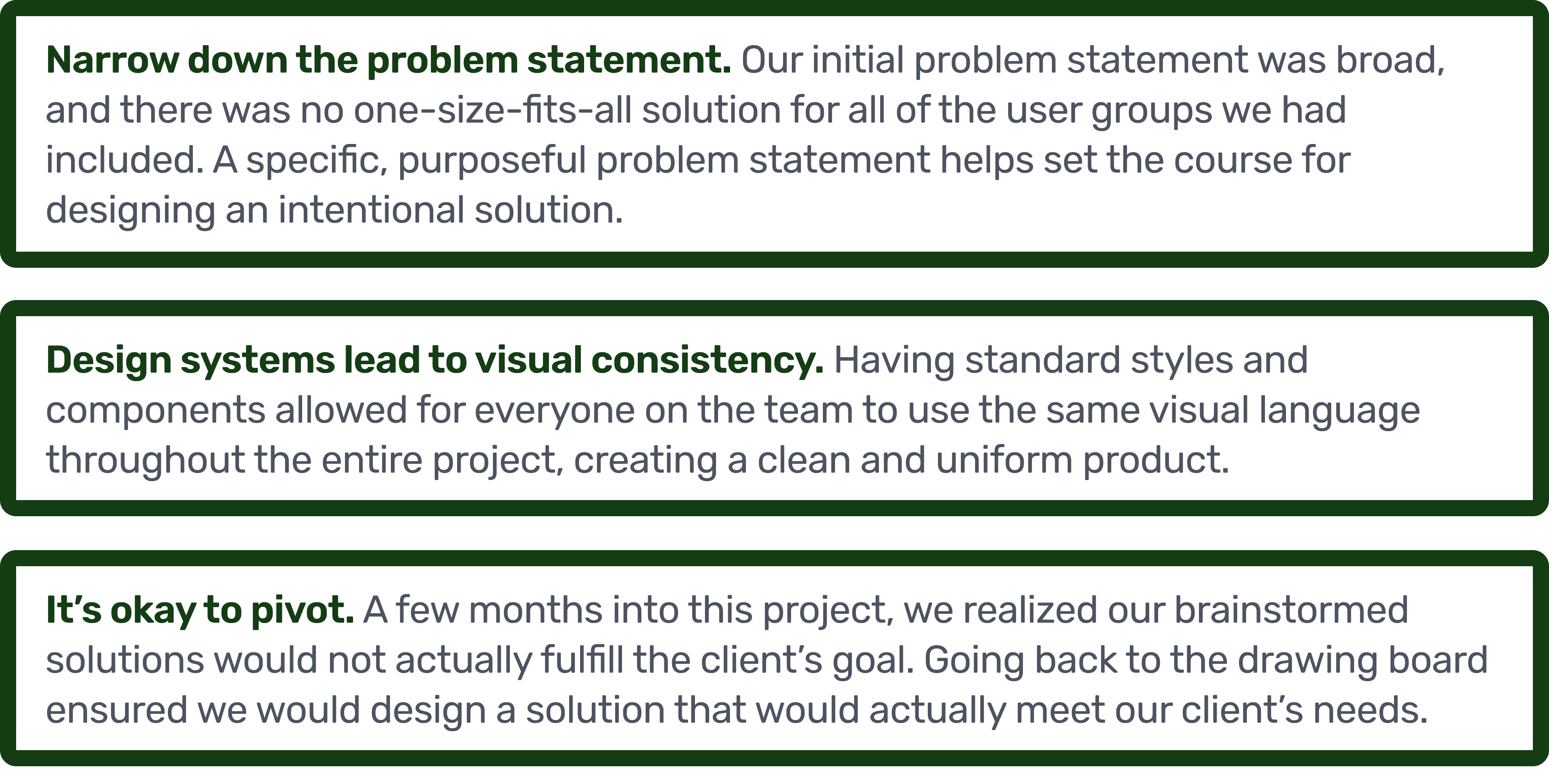
Key Takeaways: